
Can we help the Grid by developing off-grid clean power systems?
(Disclaimer: This article represents the views of the author, Prof Cruden, and does not necessarily reflect those of any individual or the wider group)
The FEVER project ran a successful policy workshop at the Institution of Engineering and Technology (IET) Headquarters Building in Savoy Place, London, on Wednesday 26th November 2025, including representatives from Ofgem, DfT (OZEV), SSE, Siemens and the IET, as well as from the Universities of Sheffield, Portsmouth and Southampton (see Figure 1). The key query was to explore and discuss whether current Government transport and energy policy would benefit from more explicit inclusion and appreciation of the role off-grid (i.e. grid independent) power systems could offer to our national Grid.
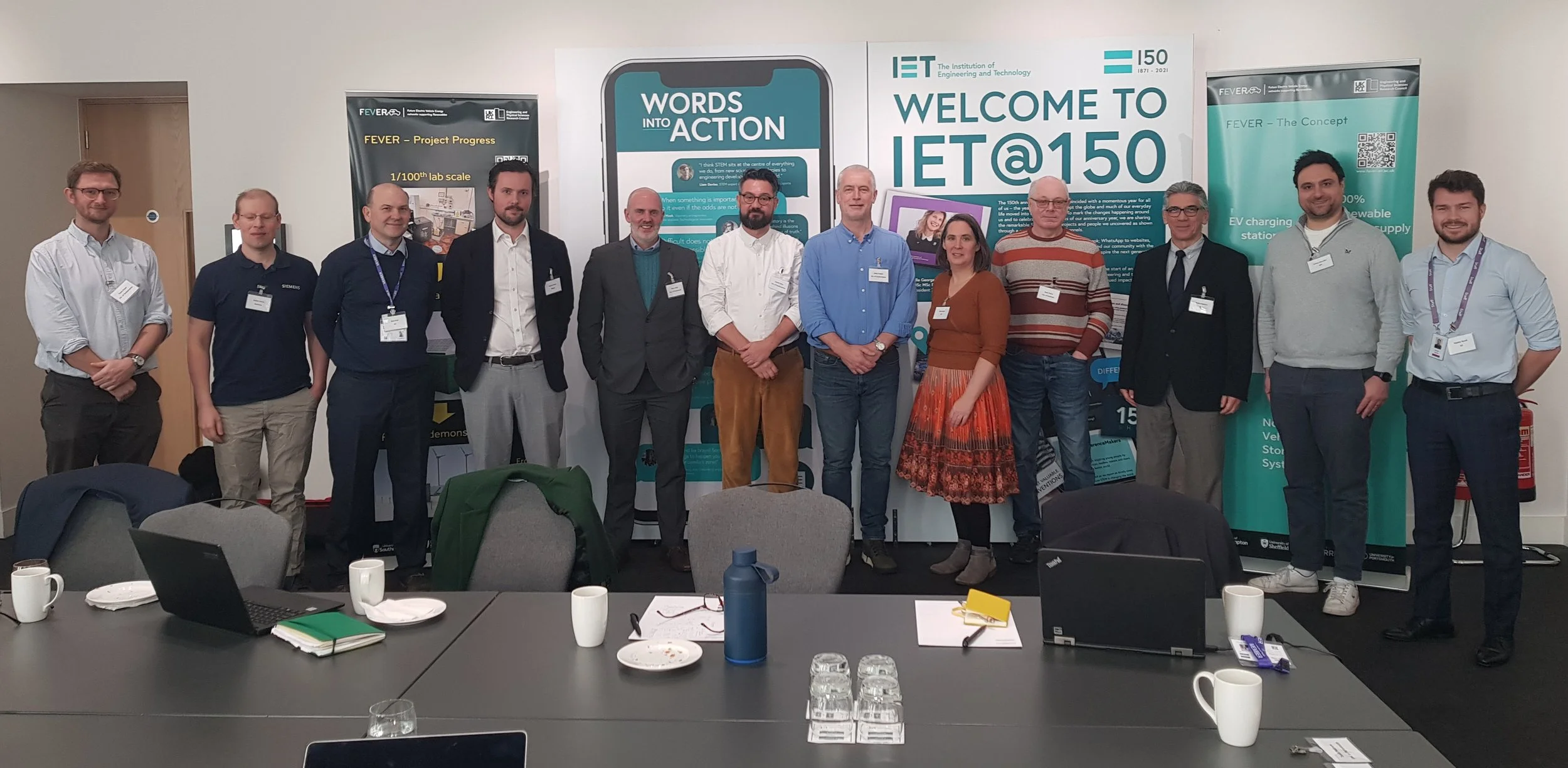
Figure 1: The off-grid policy workshop, held at the IET Headquarters in Savoy Place, London, had representatives from Ofgem, DfT (OZEV), SSE, Siemens and the IET, as well as from the Universities of Sheffield, Portsmouth and Southampton
Current UK Government energy policy e.g. the Clean Energy 2030 Action Plan, sets out ambitious plans to tackle 3 major challenges:
1) the need for a secure and affordable energy supply;
2) the creation of essential new energy industries, supported by skilled workers in their thousands;
3) the need to reduce greenhouse gas emissions and limit our contribution to the damaging effects of climate change.
However, this comprehensive Action Plan, and more focussed Local Energy Plan to roll out some 8GW of local and community energy projects, does not recognise nor support, the creation and delivery of clean energy ‘off-grid’ energy solutions i.e. solutions completely independent of the National Grid (e.g. to deliver clean energy off-grid EV charging stations, see www.fever-ev.ac.uk). The FEVER research project team believes this is a significant omission, as such off-grid systems could:
1) inherently offer greater resilience and energy security to their local loads;
2) be de-coupled and not affected by external geo-political influences such as rises in international/national gas prices (and hence UK grid electricity prices);
3) be developed at pace and scale, independent of significant grid connection queues and costs;
4) enable more local and community energy projects by direct sale of energy as a ‘premium’ product and NOT as grid electricity e.g. as an off-grid EV charging hub at 30 – 80 p/kWh compared to 7 – 9 p/kWh for a grid connected solar farm.
Recently the potential of off-grid systems has been considered and is being actively explored within the Nov 2025 DfT/Innovate-UK funded competition Call (https://www.gov.uk/government/news/10-million-for-cutting-edge-tech-to-help-futureproof-englands-electric-vehicle-chargepoint-supply-and-keep-drivers-moving), which is seeking new, innovative technologies to speed up the chargepoint rollout on motorways and major A-roads, addressing potential EV purchasers and users concerns around range anxiety. Specifically, this Call "will allow electric vehicle charging devices to operate without large grid connections or even off-grid" and could be considered a harbinger of the potential impact such off-grid systems could deliver.
The outcomes of this workshop are being collated and analysed with the aspiration to present and further discuss this area in a future second workshop with a wider group of stakeholders. The ultimate ambition of this policy study is to understand whether there is a robust, evidenced case that can provide Government the information and confidence that off-grid energy solutions be formally recognised in relevant Government policy and support mechanisms.