
This week, the FEVER team visited one of United Utilities’ (UU) Wastewater Treatment sites.
The Cargo site has been a UU target to upgrade the site to minimise spills following storm overflows and hence reduce potential pollution issues[1], part of UU’s ‘Better Rivers’ Programme[2]. Ensuring the safe, clean, secure and reliable energy supply for continuous operation of such sites is a significant challenge. The high costs, capacity constraints, and long waiting times for securing connections and upgrades to the electricity grid, often leave these essential facilities vulnerable.
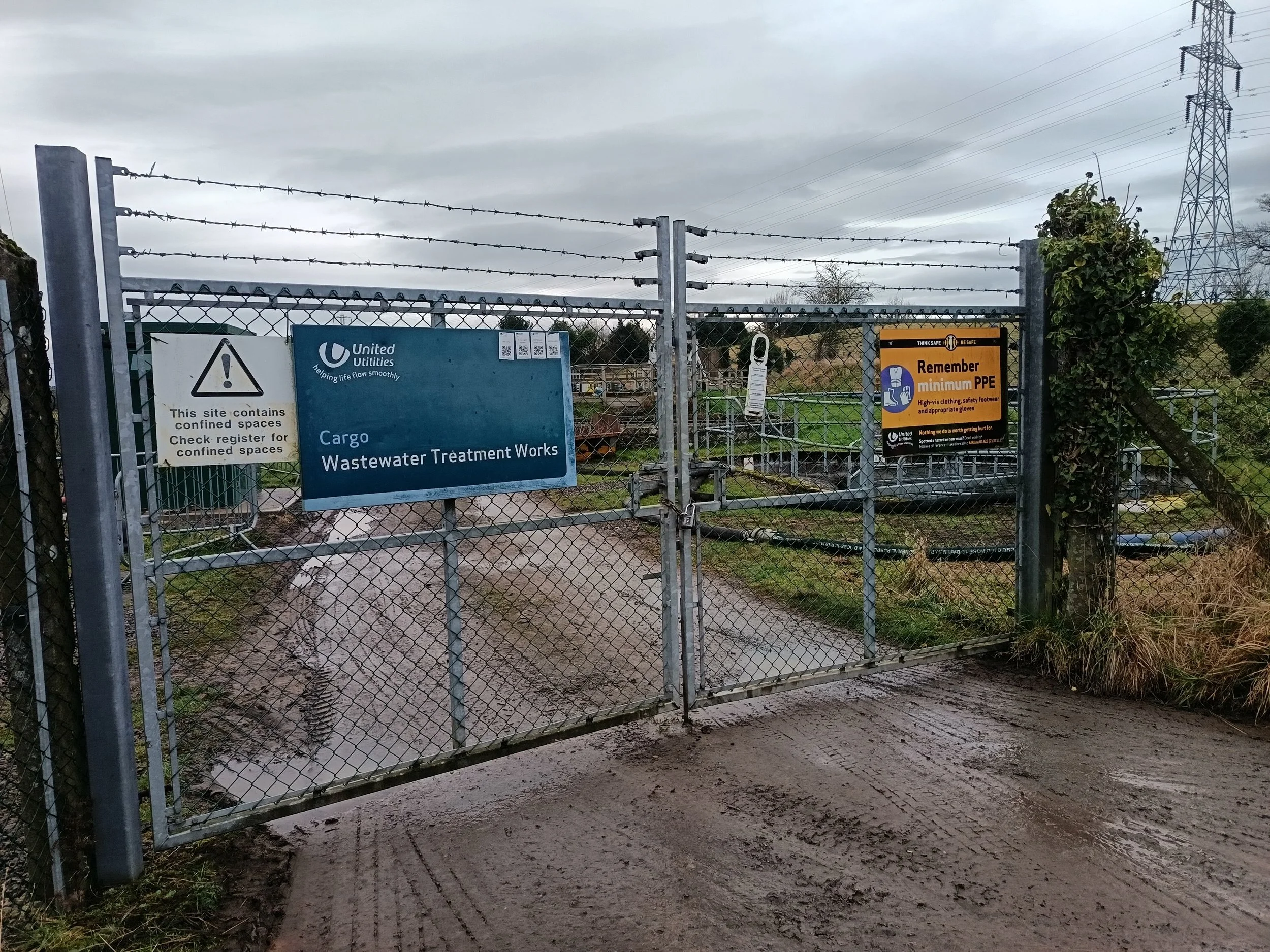
Entrance to United Utilities Cargo Wastewater treatment works.
For critical sites like the Cargo Wastewater Treatment Works, near Carlisle, power failure is not an option. These facilities must operate 24/7 to process waste and prevent environmental contamination. To guarantee this reliability, the site currently relies on use of diesel generators. While functional, this solution is expensive, carbon-intensive, and releases pollutants into the local environment.
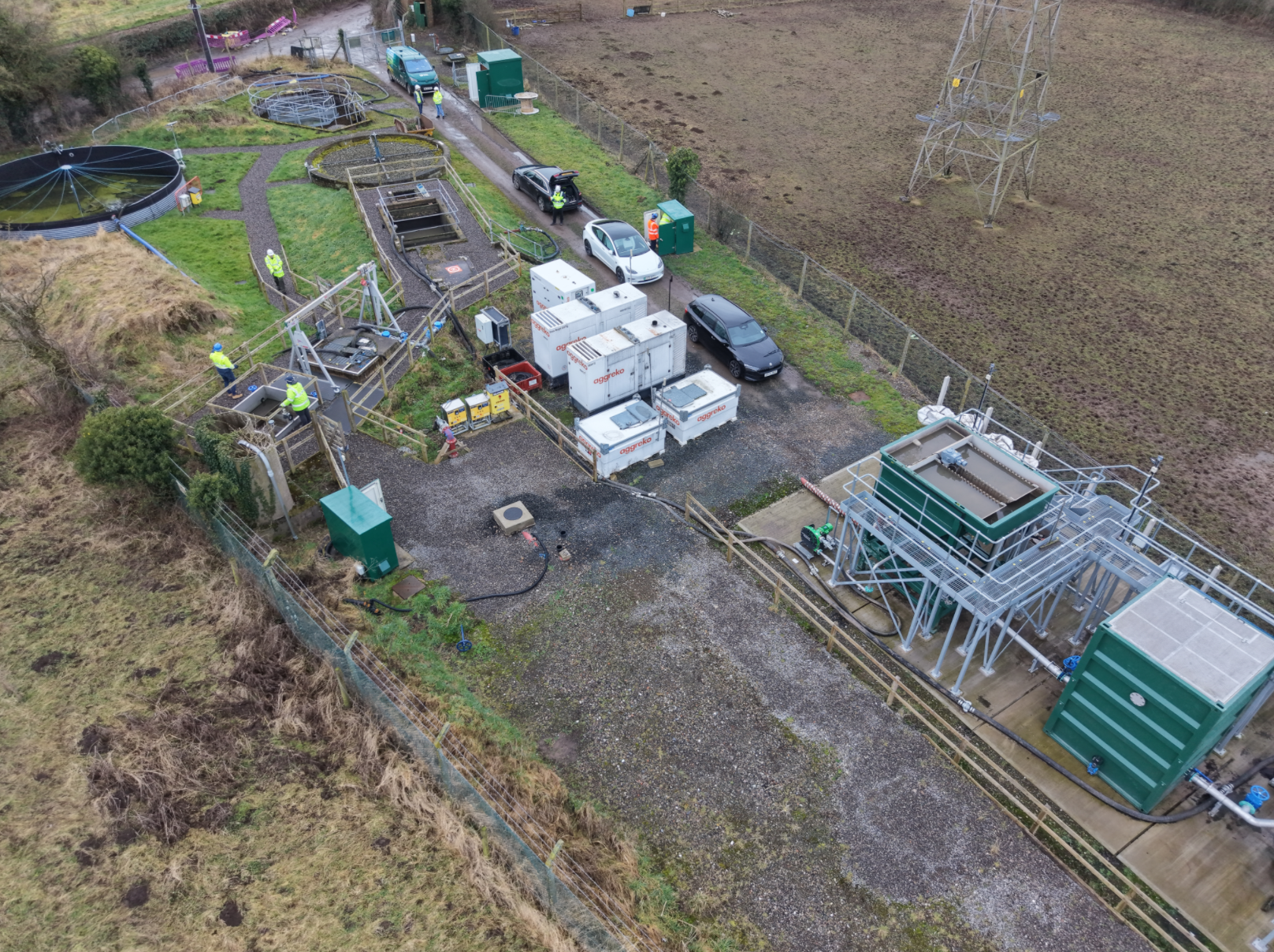
Aerial View of Cargo site
The FEVER project aims to prove that a renewably powered system with integrated energy storage, even in the most demanding environments, can reliably and securely maintain supply.
Our proposed solution is a fully renewable, microgrid combining solar photovoltaics, wind generation and hybrid energy storage systems.
Renewable energy is intermittent, and a standard battery often isn't enough to secure a 100% reliable supply for critical infrastructure. Our research focuses on hybridising different types of storage technologies to smooth out these fluctuations, ensuring the FEVER system supplies a stable, continuous power regardless of the weather.
Keep an eye on our website for future updates on the United Utilities demonstrator.